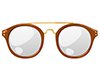
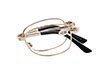
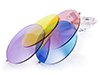
Sunglasses use various materials to ensure the highest quality and most protection for our eyes. From the frames to lenses to the process, manufacturers follow the highest standards.
As a user or wearer of sunglasses, you must understand the different frames and lenses. It will help you know the best option according to what you need. If you’re looking to sell eyewear, you must understand what to offer to your target audience.
Thus, we explain everything about sunglasses. In this article, we focus on lenses and frames of sunglasses.
Differences and Links Between Sunglasses and Optical Frame Glasses?
Sunglasses by the frame and lens two parts, mainly for blocking the sun and decorative role, the vast majority of lenses are tinted flat sheet. But in the choice of mirror material and frame technology is generally not very careful, the corresponding consumer wearing years also in a season or two seasons. The sale of sunglasses with obvious seasonality.
Optical frame generally refers to the frame alone, mainly for dispensing luminous glasses, whether the mirror material or production process have higher requirements.
General optical frames with full-color or half-color resin lenses, glass lenses can also be used as sunglasses, and can be photometric, made of myopic sunglasses.
Part of the middle and senior sunglasses frame to reach or even exceed the standard of optical frames, can be used as optical eyeglass frames.
Similar to the general optical glasses, also mainly divided into plastic materials and metal materials two parts, the difference is that the proportion of plastic material frame is higher.
Plastic materials – acetate, propionic acid fiber, nylon, coroplast, carbon fiber, etc.
Metal materials – hard bronze, white copper, manganese nickel alloy, titanium alloy, pure titanium, gold, K gold, etc.
Function of Sunglasses
Sunglasses are more than for styling. With climate change and ozone layer depletion, we need to wear sunglasses more than ever.
Thus, eyewear manufacturers have improved their equipment and process for making sunglasses. This way, they can further enhance and improve the changing needs for sunglasses.
With that said, here are the primary functions of sunglasses.
Sunglasses’ primary purpose is to block the sun. Are you a cyclist, driver, or fishing enthusiast?
Whether you work outside or you enjoy outdoor activities, you need sunglasses. It blocks the harmful UV rays and glare and improves visual clarity.
We can’t stress enough the importance of sunglasses for eye protection. Besides, it also has a critical function when it comes to optical correction.
For contact lens wearers, sunglasses also prevent water evaporation. If there’s reduced water vapor, it can maintain contact lenses’ optical properties. As a result, it leads to a better vision.
Sunglasses prevent the eyes from getting burned by strong sunlight. But, with the thinning of the ozone layer, serious eye diseases may happen even if you don’t look at the sun.
Without protection, ultraviolet (UV) rays can cause long-term damage to the eyes. Thus, sunglasses lenses must have adequate blocking protection against the sun.
Sunglasses provide unique fashion. You can choose from different styles and colors. We can see it a lot, especially during summer for many people.
Some people also put their sunglasses on their heads. Others hang them in their clothes as an accessory.
Different Lenses of SunglassesLike the frames, the lenses of sunglasses come in different types. They vary in materials, colors, and shades.
More than fashion statements, each lens material offers advantages and disadvantages. Let’s take a quick look at the different lenses of sunglasses.
The lenses of sunglasses play the most crucial role. Its sole responsibility is to provide the most protection to the eyes.
But did you know that there are various lens materials? Here are the different lens material types and their advantages and disadvantages.
Plastic lenses are a popular option if you prefer lightness and durability. The most common plastic lenses are Polycarbonate Lenses (PC) and Acrylic Lenses (AC).
It only weighs half the weight of glass lenses, so plastic lenses are lightweight. As a result, you won’t feel heavy wearing it around your nose. Plus, plastic lenses offer rich colors, especially for fashion.
But, the surface wear resistance is not as good as glass lenses. It’s because plastics have thin and soft properties.
As a result, this material is more prone to have some deformation after pressurizing. It is the process of fitting the lenses to the eyewear frame.
So, it may affect the optical properties of the lenses. Thus, extra care is essential if you’re choosing plastic lenses.
The resin lenses are the best in optical properties. Moreover, it has better surface abrasion and UV resistance. It sounds too perfect, but resin lenses are expensive.
Ordinary (Coquille glass lens) and Ground glass lenses are some common glass lenses.
The optical properties are stable (ground glass lenses). The pressure used in framing doesn’t create deformation, unlike plastics. Moreover, manufacturers treat reinforced glass lenses with special heat polymerization.
As a result, it increases durability and safer lenses. But, glass lenses tend to break easier and are heavier to wear.
Polarized lenses are impact lenses with a special purpose. It filters the reflected light (or glare) of strong sunlight.
Have you noticed how blinding it is to look at reflected light?
Imagine walking on the street while raining or driving after the snow. The reflected light from snow surfaces or car hoods can be so dazzling.
Thus, the vision becomes clear and smooth even with lots of glare surrounding the area. Polarized lenses are suitable for drivers, fishing enthusiasts, water athletes, and snow workers.
A brief history of polarized lenses…
Around 1940, Dr. Rand discovered the principle of the polarization of light waves. Later, he invented “polarized lenses.” Manufacturers used it to make sunglasses, camera lens filters, and for scientific purposes.
Then, it gained popularity in the US and created Polaroid. The lenses of some polarized sunglasses still use polarized lenses provided by Polaroid.
Polarized lenses consist of thin layers of pressed resin material. Each layer has a different effect. For example, the first layer is the polarizing layer. It works like a shutter to filter out stray reflected light.
Then, the second and third layers filter 99.9% of harmful UV rays and reduce light intensity. It is the same as the function of ordinary sun lenses.
The fourth and fifth layers are impact resistant so that the lens is not easy to break. Finally, manufacturers reinforce the sixth and seventh layers. This way, the lens is not easy to wear.
Its principle is to protect the eyes by transitioning the color of the lenses. It darkens in the sun and returns to lighter colors indoors. This reaction is a result of the sunlight intensity.
Color-Changing Lenses Glass is gaining popularity, especially for those who wear prescribed eyeglasses. It is because they do not have to bring two eyewear each time they go out.
In this case, photochromic lenses already provide a 2-in-1 solution. It provides eye protection and prescription to its users.
Lenses come in different colors. But did you know that they are not only for fashion? Different lens colors have respective characteristics that offer unique features. Let’s look at some of the most common colors of lenses.
Gray – This color absorbs any color spectrum so the wearer can have a darkened view. But there is no significant chromatic aberration, showing a true natural feeling. It is a neutral color.
Teal – It filters a lot of blue light resulting in improved visual contrast and clarity. This color is helpful in the case of heavy air pollution or fog.
Green – This lens color can absorb light while maximizing the amount of green light reaching the eyes. So they have a cool and comfortable feeling. It is also suitable for people whose eyes feel tired fast.
Blue-Gray – Like gray lenses, they are neutral lenses. But it is darker and has a higher visible light absorption rate.
Mercury – It has a high-density mirror coating on the surface. Such lenses absorb and reflect more visible light. So, outdoor sportspeople can wear it often.
Yellow – These lenses do not belong to the sun lenses because they hardly reduce the visible light. But, yellow lenses can improve contrast in foggy and dusk situations. This color provides more accurate visual images, also known as night vision goggles. Some young people wear yellow lenses “sunglasses” for decorative use.
Light Blue and Other Light Colors – Light-colored lenses are for decorative purposes. These are not practical lenses.
The color shades of the lenses affect the functionality of the lens. As a rule of thumb, a darker color lens absorbs more visible light. So, it becomes more prominent in blocking sunlight.
Generally, dark sun lenses can absorb more than 75% of the visible light. Meanwhile, some light-colored lenses may absorb less than 50% of the visible light.
Lens color shade only affects the visible light absorption performance. Thus, it has nothing to do with UV resistance. Since UV is invisible light, the lens material determines the UV resistance. The color shade has nothing to do with UV resistance.
For example, a colorless resin lens can still have 100% resistance. Such eyewear functions well in protecting your eyes against UV when outdoors. At the same time, it can have an excellent decorative effect indoors.