1.The most commonly used ones are the interpupillary distance ruler and the interpupillary distance meter
2. The computerized automatic optometer reports the distance between the pupils while performing refractive examinations
3. Optometry frame with cross-shaped test pieces (cross-shaped built-in auxiliary lenses for comprehensive optometry instrument)
4. The cross plate method, a currently popular determination method
The most commonly used methods are still the interpupillary distance ruler and the interpupillary distance meter. The interpupillary cross method is to mark the interpupillary cross on the interpupillary after selecting the spectacle frame according to the wearer's facial features, which can measure the interpupillary distance and interpupillary height of one eye, making the spectacle fitting more accurate. Progressive lenses are made in this way.
Types of interpupillary distance measurement
The distance is measured by the interpupillary distance
The distance between the pupils is used for measurement
Measurement of monocular interpupillary distance
Interpupillary distance measurement for special eyes
Distant interpupillary distance (FPD
Use the concept of interpupillary distance for distance
It refers to the interpupillary distance when a patient looks into the distance, that is, the distance between the centers of the pupils of both eyes when they look straight ahead into the infinite distance
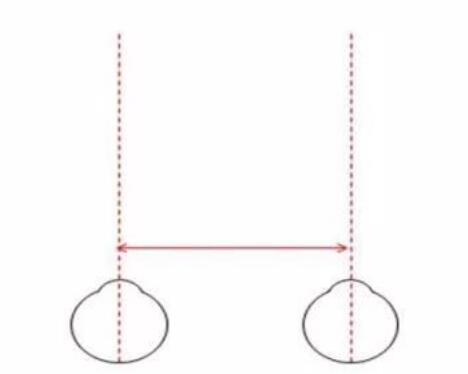
The interpupillary distance gauge is used to measure the distance
Method 1: The pupil margin method.
(1) The examiner and the patient sit facing each other at eye level, with a distance of 40cm between them.
(2) The examiner holds the interpupillary distance gauge in the right hand and places it horizontally and vertically
Place it at the horizontal position of the pupil center.
(3) The examiner closes the right eye and asks the patient to focus both eyes on the examination simultaneously
The left eye of the person.
The interpupillary distance gauge is used to measure the distance
(4) Align the "zero mark" of the interpupillary distance gauge with the patient's right pupil
The inner edge (outer edge) of the hole.
(5) Keep the head of the examiner and the patient still and the interpupillary distance gauge level
The examiner closes his left eye and opens his right eye.
(6) Have the patient look at the examiner's right eye with both eyes simultaneously. .
(7) Read the interpupillary distance gauge at the outer (inner) edge of the patient's left pupil.
The scale value is the distance between the distant pupils of both eyes of the patient
Near interpupillary distance (NPD
● Use the concept of interpupillary distance for proximity
It refers to the patient's gaze on a nearby target, that is, 30 to 40 centimeters in front of the eyes
The distance between the centers of the pupils when reading or working at close range.
The near pupil distance is measured with an interpupillary distance gauge
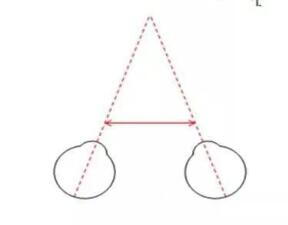
Method 1: Limbal method.
(1) The examiner and the patient sit facing each other at eye level.
(2) Measure the patient's optimal comfortable nearby working distance (generally)
30- 33cm.
(3) According to this distance, the examiner places his or her left eye or right eye
Place the eye right in the middle of the patient's eyes and close the other eye.
(4) Have the patient focus both eyes simultaneously on the eye of the examiner placed in the center.
The near pupil distance is measured with an interpupillary distance gauge
(5) The examiner holds the interpupillary distance ruler in his right hand and places it horizontally or vertically on the patient
Before my eyes
(6) Align the "zero mark" of the interpupillary distance gauge with the cornea of the patient's right eye
Inner edge (outer edge
(7) Read the interpupillary distance gauge at the lateral (inner) edge of the patient's left cornea.
The scale value is the near pupil distance of both eyes of the patient.