Following the official implementation of Article 5 of the EU Packaging Regulation, compliance standards in packaging for the optical industry have significantly improved.
Regulatory inspections no longer focus solely on outer packaging boxes but now cover all components of the entire package: four banned heavy metals—lead, cadmium, mercury, and hexavalent chromium—whose total content must be strictly controlled and must not exceed 100 mg/kg. Only if the entire product meets these requirements can it be exported.
For eyewear, this category represents a crucial test for the industry.
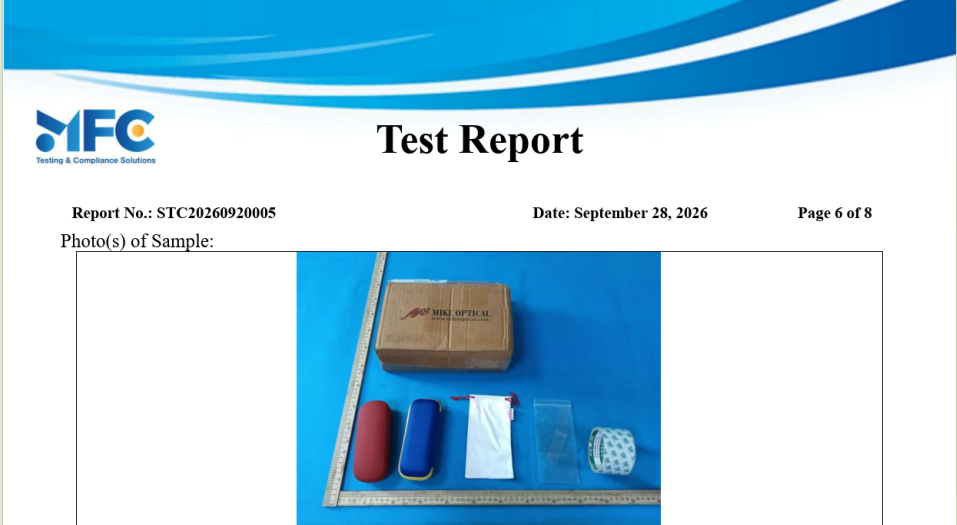
The proposed retail packaging for an eyeglass set includes paperboard, EVA packaging boxes, fabric storage pouches, rigid plastic bags, adhesive tape, printed films, zippers, small metallic accessories, etc., with raw materials sourced from numerous manufacturers along the supply chain. Any substandard component that exceeds the standards may lead to complete store closure and delay customs clearance, resulting in significant losses for customers.
Take proactive compliance measures instead of waiting for passive corrections
Wenzhou Mike Optics does not rely on suppliers' written declarations or wait for customer compliance inquiries. Instead, the company actively conducts a comprehensive compliance review across the entire value chain.
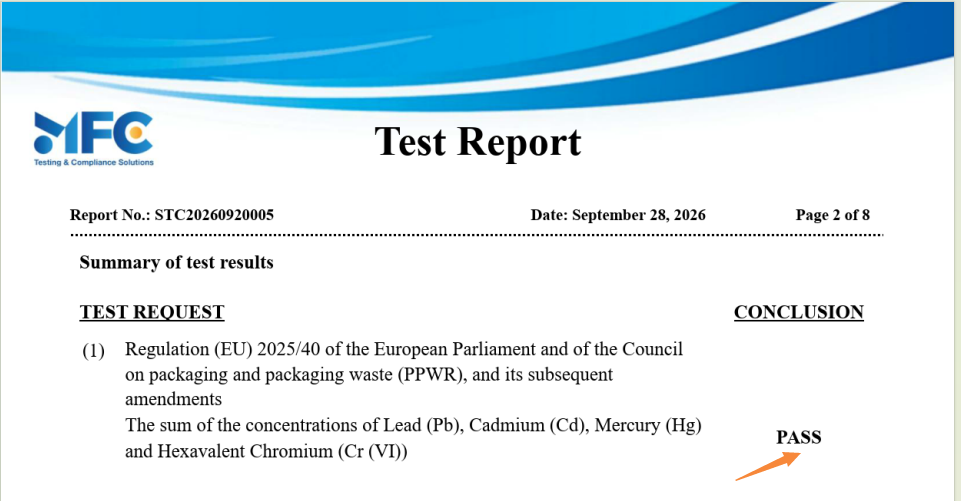
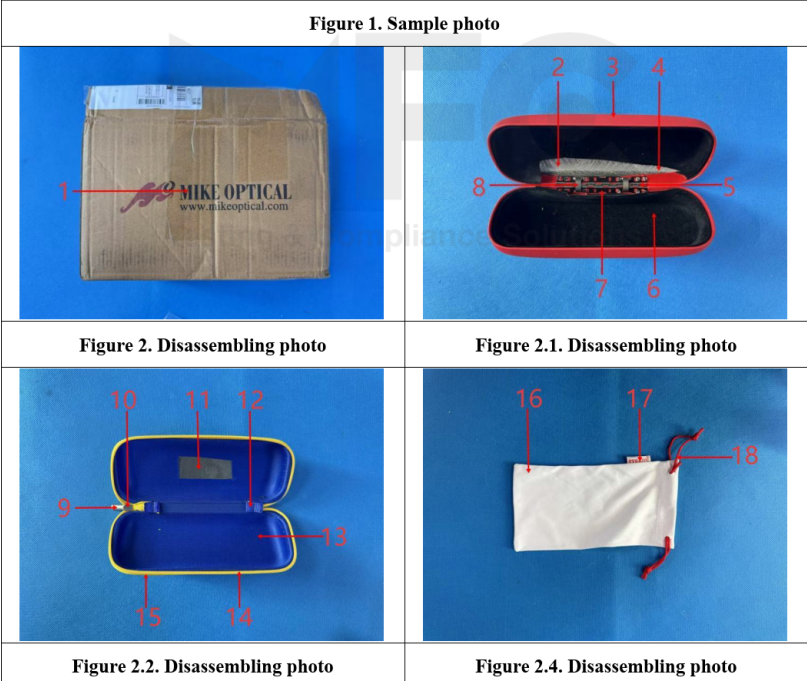
We disassemble and analyze every individual component of each eyewear packaging, select 21 independent parts that are not made from packaging materials, and send them to an accredited certification laboratory for specific heavy metal testing. None of the tested components showed the four required heavy metals, fully meeting European PPWR regulations. This provides a solid and reliable foundation for export compliance as well as for the official conformity declaration under Annex VIII.
The PPWR-compliance review highlights four fundamental values
1. Compliance capabilities enhanced to strengthen the competitiveness of core products.
Today, European buyers' purchasing behavior has changed: conformity comes first, followed by price, style, and delivery time.
PPWR compliance certificates, complete component test reports, and official declarations of conformity are now essential requirements for securing orders in the European market. We have anticipated the entire compliance chain and can meet our customers' demands regarding conformity testing at any time.
2. Monitor the supply chain comprehensively and prevent risks at their source.
For high-risk materials such as inkjet inks, surface coatings, and metallic components, we thoroughly examine the entire procurement system, eliminate unqualified raw material suppliers, and integrate packaging chemical safety into the regular quality control of incoming materials (IQC).
This results in higher short-term costs and increased workload in quality control, but enables long-term stabilization of raw material quality, thereby forming a solid barrier for ensuring the security of the export supply chain.
3. Implement a strict change control system
Compliance with PPWR is not a one-time measure. All inspection data apply only to fixed formulations and specified materials.
Currently, we have integrated the exchange of packaging materials, formulation adjustments, and accessory parts into the rigorous process of change verification, following the same standards as for frames and lenses, to avoid any risk of future non-compliance.
4. Reducing compliance risks for customers, strengthening trust abroad
Supervision and inspections in the European market are becoming increasingly stringent. Comprehensive data on tests and technical documentation fully support customs audits and targeted market controls. We ensure compliance so that customers can explore the European market risk-free and establish stable, sustainable cooperation.
Continuous analysis of future compliance trends
Monitoring heavy metals in PPWR packaging is just the beginning of EU green compliance. Further developments include manufacturer responsibility (EPR), assessments of packaging recyclability, and regulations regarding shareholding ratios.